

She Knows Me Too Well
A sideways glance at the Brian Wilson catalogue that avoids Pet Sounds and Good Vibrations, but, first, some words.
Brian Wilson: “One day I will write songs that people will pray to.”
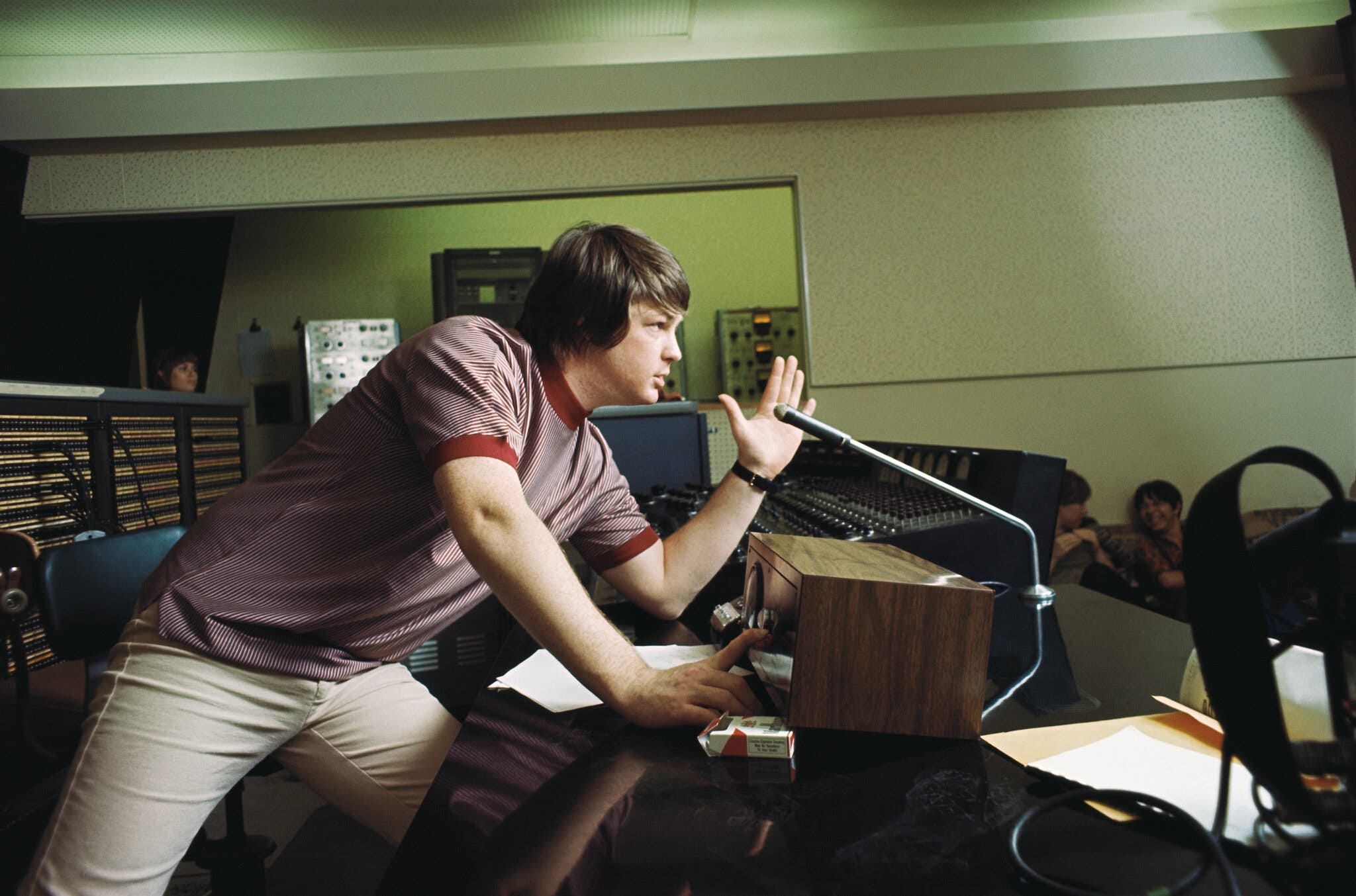
This is a very long post, but a) it wasn’t meant to be, and b) it’s Brian Wilson, whose passing prompted thousands to share ‘Good Vibrations’ and ‘God Only Knows’ worldwide. However, it probably warranted a more nuanced love-fest of some of his lesser-known works. I’m aware, too, that I’m not the only one doing this, but some 35 albums (23 by the Beach Boys and 12 solo), countless singles, demos, and some of the most significant works of the 20th and 21st centuries offer a wealth to dig into.
The first time I went to Los Angeles was in 1983. I was on a plane to London and had 24 hours to kill. I was staying in a cheap dump near LAX and called a cab via the disinterested desk clerk. “Where to?” the driver asked. “Hollywood”, I said. He explained that the big H was a large place. Could I narrow it down? he asked. The Capitol Building said I. “Ahh, the house that Frank built,” he said. No, I thought, “The house that Brian built”.
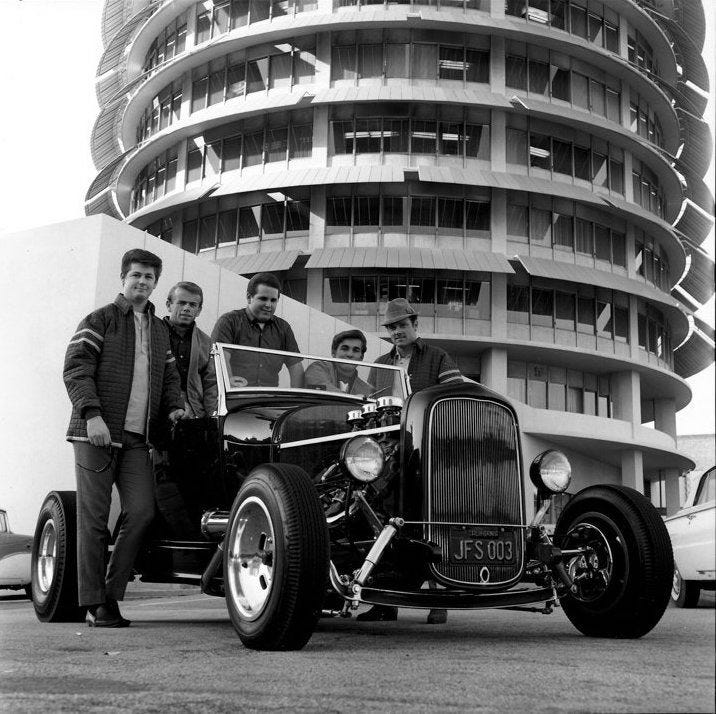
In December 2004, a couple of thousand of us shuffled into a theatre in Auckland’s Aotea Centre. The occasion was the final 2004 date of a worldwide tour celebrating a reimagined SMiLE, the album he'd famously started and then discarded in 1966, after emotional pressure and sabotage from both his bandmate, the eternally odious Mike Love, and, sadly, the record label whose fortunes he’d help make over the previous five years, the aforementioned Capitol. Brian’s coworker, on what was essentially a solo project by Wilson, the lyricist Van Dyke Parks, had also been forced out by Love.
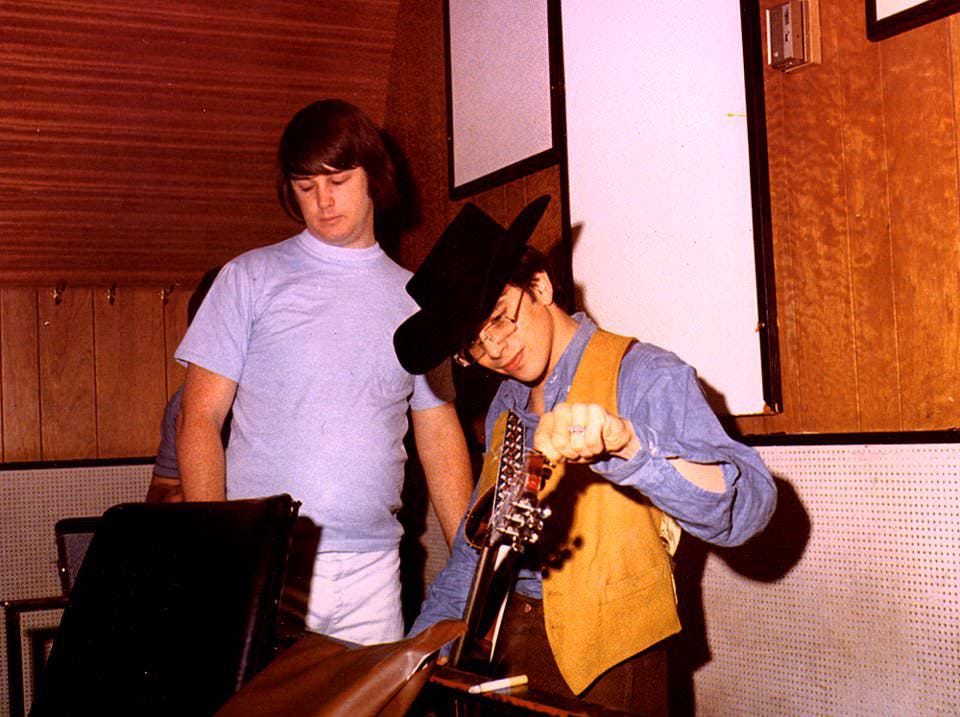
While large parts of what was recorded at Western Recorders, Capitol, and Gold Star in LA for that original album still existed in tape vaults, much of it, equally, a broken Wilson had also wiped. Large parts of the album scheduled for 1967 existed only in his head, an emotionally damaged place that took the American composer and studio wizard into a very dark spiral over the next 30 or so years. The work, a suite celebrating Americana as seen from the shores of Los Angeles looking east, had finished songs and partially finished songs. Still, much of what was meant to bridge it all together, and other songs, only existed in Wilson and Van Dyke’s memories.
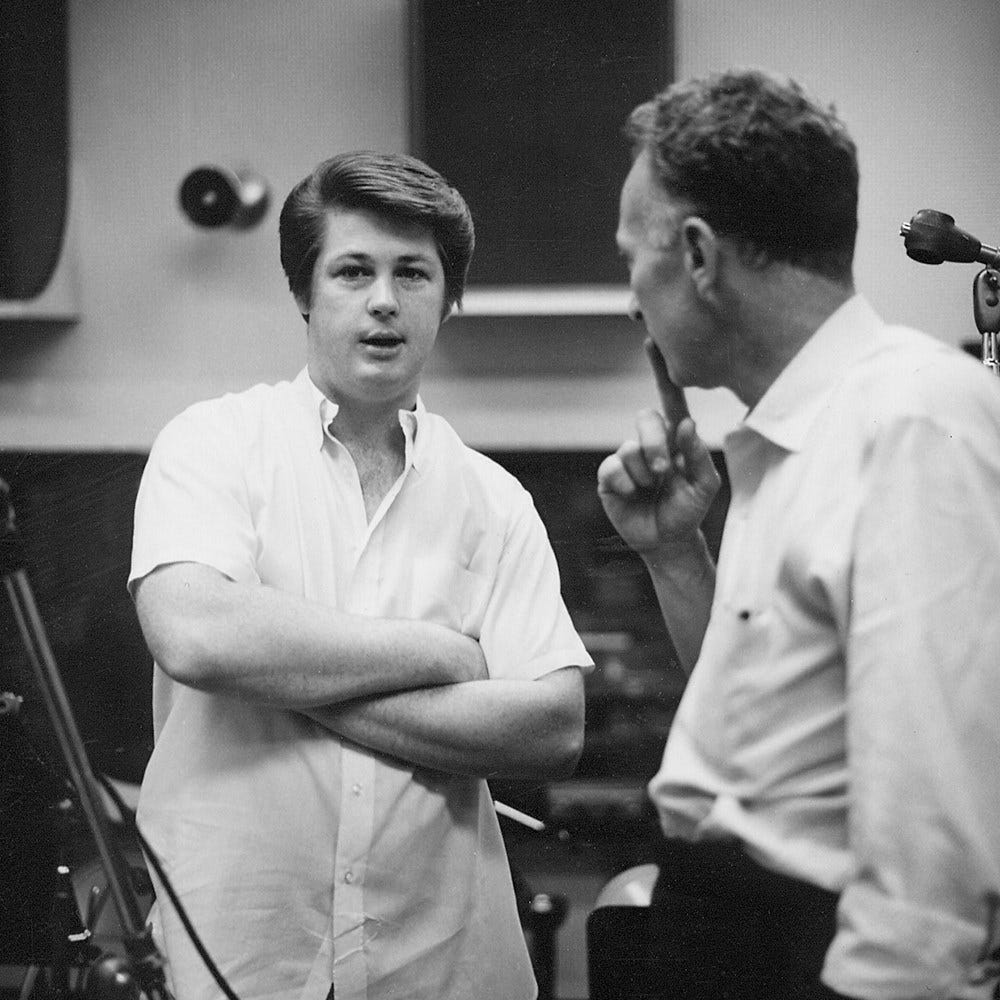
Brian was persuaded by sympathetic musicians, music historians (including writer David Leaf), and Brian’s second wife, Melinda, to revisit the legendary lost work early in the 2000s. He was initially reluctant but gradually warmed to the idea, especially when Van Dyke returned to the project, bringing not only memories but also notebooks he had kept. His creation, Brian Wilson Presents SMiLE, gathered existing finished and partially completed material and added new or recalled lyrics and melodies based on the music still in his head: a blend of creative magic and one of the century’s most celebrated and influential musical geniuses simply doing his thing again. There were no initial plans to record it.
The live premiere took place at London’s Royal Festival Hall on 20 February earlier in that same year, in which we shuffled into the Aotea. The London gig was hailed by The Guardian at the time as "one of the greatest of American symphonies," and named by Q, possibly with some overstatement, as the fifth most important gig of all time (considering that their top four were mostly Britpop, and notable omissions like Ellington at Newport in 1956, and Dylan at the same venue in 1965 seem very odd, the world likely won’t suffer if that list is quietly forgotten). There were about 93 dates on the tour, ending in Japan on 3 February 2005, and Auckland was, according to the internet, the 78th.
I had to persuade Brigid to come with me. For her, the band was all ‘Fun, Fun, Fun’ and ‘Surfing USA’, given that she was an 80s post-punker/clublander at heart. It was also “boys’ music”, she said. Perhaps, but by the halfway point of the evening, she was standing on her seat alongside the other two thousand ecstatic fans. The hits that came before and after the main event were fun, but the triumph of the night was the complex suite of gorgeous Americana-lost crafted by the man sitting at a keyboard centre stage.

Between the London premiere and our show, the band had done the obvious — recorded the show, almost live, although with newly crafted sections, and released it in late August via the Warner Music leftfield imprint Nonesuch. It was a label created by Elektra’s Jac Holzman in 1964 to record, as he said, “fine records at the same price as a trade paperback". The paperback part soon expired, but the label has, for some 60 years, been the home to often wonderful records that don’t seem to fit anywhere else. In 2025, it partners with one of the best record labels on the planet, International Anthem, to co-release some of their quirky magnificence that may or may not be jazz. That sort of thing.
Brian Wilson Presents SMiLE, the album, was perfectly timed. The label got it, and so did the media and the public: it became a Top 10 album worldwide, probably the label’s first, and garnered Brian his first Grammy (how wrong is that oversight…).
Metacritic said in 2011, it had an average score of 97, making it the third-highest rated album in the website's history. It’s a ranking that, at the time of writing, 21 years on, it still holds.
All of this meant I was anticipating David Leaf’s book on the SMiLE saga. There have been earlier books on the sessions and journey, some by hacks, some more credible, but Leaf is the leading Beach Boys historian. He’s not a nutter like some of the obsessives (as evidenced in this Word interview recently; why do the British do fan videos so much better than the Americans? David was also interviewed in several video blogs, all hosted by overly excited loud people who spouted hyperbolic tosh), he made the terrific Beautiful Dreamer: Brian Wilson and the Story of SMiLE documentary, and has been key to the glorious Beach Boys box sets Universal has been releasing this century. The only flaw in that documentary might be the parade in places of sometimes irrelevant talking-heads with quotes, which foreshadows the horrors of the Netflix music documentary by over a decade. But was it visually and sonically captivating, with insights, detail from so many important actors in the story and more importantly, coherent interviews with Brian before his slow cognitive decline over the last fifteen years or so. It’s one of the great music documentaries from an era when such films were rare beyond the BBC and Channel 4.
David Leaf’s SMiLE (The Rise, Fall & Resurrection of Brian Wilson) was published about six weeks ago, and, yep, as a mildly obsessive, I pre-ordered it from my favourite online source, Kenny’s in the people’s republic (in a non-political sense) of Ireland. It arrived two days before Brian died, and it was pushed to the top of the stack by the bed, of course.
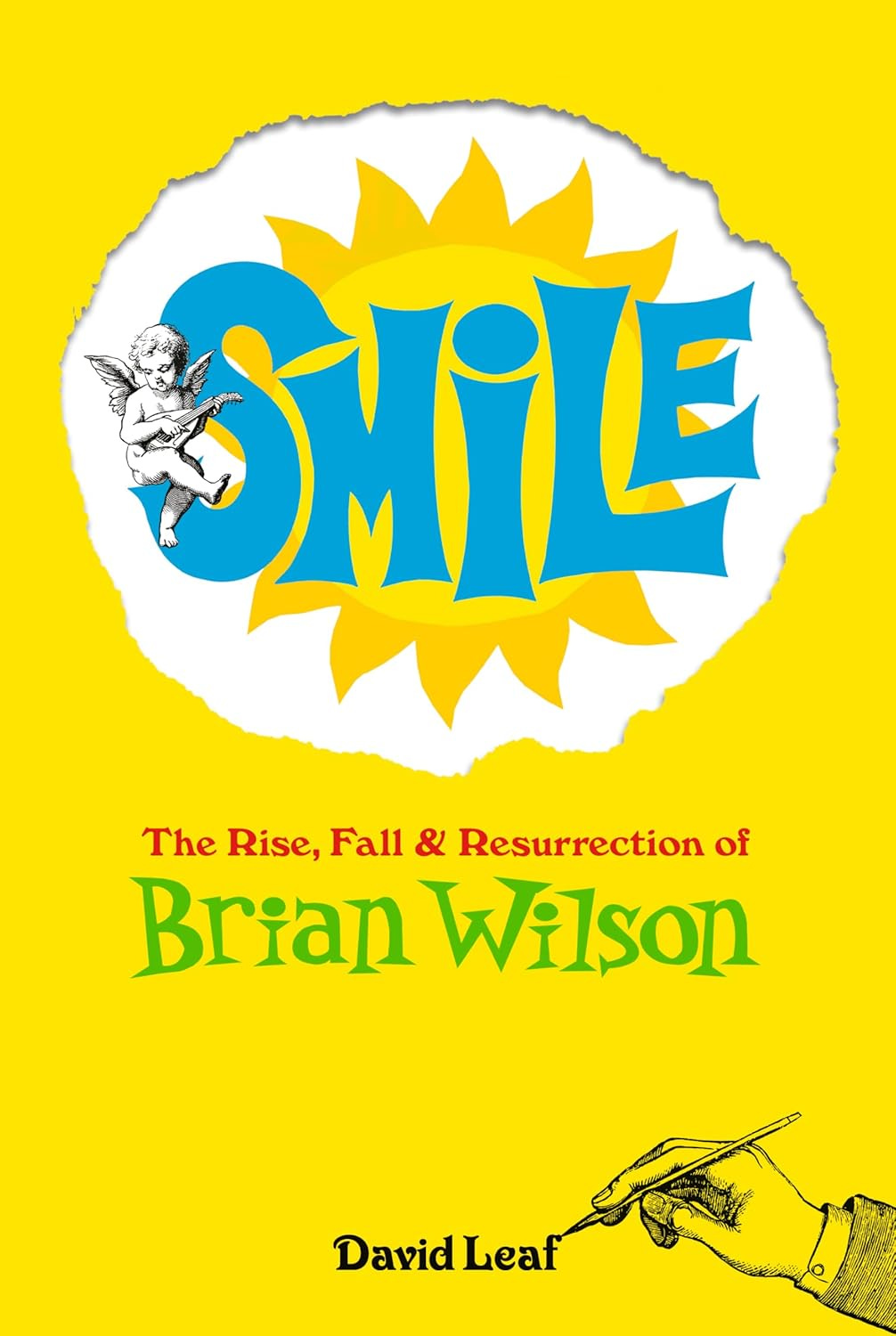
It’s an easy read. Oral histories, which is what this is, usually are. You can devour them in short bites, and the very best of them (I’m thinking of the likes of Dylan Jones’ magnificent Bowie and Velvets oral histories as examples) match that with page-turning timelines; defining often revelatory connections so things make sense finally.
Leaf begins well. His oral documentation of the 1966 events, especially the rather vicious machinations by Mike Love and, to a lesser extent, Capitol Records, are, as noted above, revelatory. Silently complicit were the other Wilson brothers and Al Jardine, who seem to have decided that cowering in the background while the odious transcendental (or soon-to-be) thug did his worst to try and reverse course as his vastly more talented bandmate redefined popular music forever.
Sadly, as the book continues, it’s swamped in places by page after page of seemingly pointless quotes that are wrapped around fascinating detail about the 21st Centutuy reconstruction and, as per the title, resurrection of SMiLE and its author/visionary. We have multiple chapters of fan responses to the shows, similar critical responses to the show, and then critical responses to the album, quotes from famous people, many lifted from the documentary, which seem utterly redundant and are endlessly repetitive. Moreover, the oral history and many quotes from the earlier doco are often randomly placed and feel disjointed.
It’s such a wasted opportunity.
But that book was not what this post was supposed to be about.
How to put this?
When Brian Wilson died, they talked about the wrong songs. Actually, that’s not correct either. People, of course, are allowed to talk about and post the songs that most affected them, and there’s little argument that it will always come down to the hits, and the songs they danced and loved to. In this case, there are far worse songs on the radio than ‘Good Vibrations’ or ‘Surfing USA’, and most people who grew up with it will love ‘God Only Knows’ until they pass.
However, the global media – even the likes of The Guardian (who should know better, I thought as I read it, until Andrew Male successfully moved the piece into a handful of latter-career triumphs) lazily rote-looped half a dozen songs from a sixty-year career, something that frustrated those of us who obsessively collected and played all things Brian Wilson. Every single outlet it seemed.
So, a slightly more obsessive fan’s favourite moments (some of them) follow:
Glen Campbell – I Guess I’m Dumb (1965)
I could probably fill this page with Brian’s productions for other people, and, indeed, there are CDs filled with these, but one stands fringed-mop and shoulders above the rest.
Brian wrote this for 1965’s Beach Boys Today album, but, yep, Mike Love rejected it, and so, with the studio musicians gathered for the album sessions, he recorded the vocal with one of them. Glen was still a year or two away from the bus to Galverston and global stardom, but you’ll forgive me if I make a claim for this as one of his greatest moments. Surf meets a very vulnerable and lyrically insecure Wall of Sound. Imagine this with a Carl Wilson vocal. Perhaps the greatest Beach Boys song that never was.
She Knows Me Too Well
Please Let Me Wonder (1965)
In the Hepworth/Ellen interview with David Leaf mentioned above, Hepworth asks Leaf what the greatest record ever recorded is (it’s something they ask every interviewee). Leaf replies, side two of The Beach Boys Today, to which Hepworth replies: Correct answer. And he’s not wrong.
If Pet Sounds and SMiLE are Brian’s finest thematic collections, they exist as suites of music, whereas both Today and Summer Days (And Summer Nights) are his finest collections of songs, with side two of the former pointing an exquisite direct arrow at Pet Sounds, but with one foot still in the earlier era.
Both of these songs, both as compositions and recordings, are the equal of anything else he recorded before SMiLE, and the vocal melodies arguably rank among his most celestial. Brian’s live vocal on Wonder in the second video is sublime, but the isolated vocals on the studio version make me want to crawl into a happy dark corner.
The Surfer Moon (1963)
The first song Brian recorded with the studio musicians soon to be known as The Wrecking Crew was also his first use of a string section. It was a break with the earlier limited constructs of the Beach Boys as a band and opened the door to the future, of course.
Brian first recorded the song with Bob and Sheri, a manufactured Hollywood duo (Bob Norberg and Cheryl Pomeroy) who also supported The Beach Boys, in 1962. However, it’s the band’s version, with Brian’s gorgeous vocal that really matters. He was 18.
Lonely Sea (1963)
Surfin’ U.S.A. was a product album. Capitol and Murry Wilson were demanding both product and a punishing live schedule to maximise return, and the amount of filler on this, their second long player, is the result. However, tucked away towards the end of side one, between a hot-rod instrumental and a hot-rod song, is Lonely Sea, the first sign that the twenty-year-old who wrote (with lyricist Gary Usher), sang and produced (uncredited) it, was something more than a few-hits wonder. The future hadn’t quite arrived yet, but it had its determined toe in the door. It was also another sign that there were darker places in the Wilson psyche.
The video is from a long-forgotten beach epic, two years later.
The Warmth Of The Sun (1964)
Shut Down Volume 2 was the band’s fifth album in two years, but despite the relentless pressure on Brian to deliver, it gifted us ‘Don’t Worry Baby’, ‘Keep An Eye On Summer’ and this, another of Brian’s early triumphs, and one that pushed more melodic boundaries. The second video explains why, and has Brian’s memories of the day it was composed: JFK had been shot, he and Love sat in his office, with the lights of LA in panoramic view, and composed a song for the moment. That interview and the 1996 remake it segues into come from Don Was’ neat documentary I Just Wasn’t Made For These Times, one of the earliest pointers that the waves of trauma and pain that had blanketed Brian for two decades might be ebbing. It’s lovely.
Let Him Run Wild (1965)
Summer Days (And Summer Nights) was released a squeaky four months after Today, and, under pressure from the record company, it marked a sort of return by Brian to the days of yore, mostly filled with throwaways (one of which, ‘Help Me Rhonda,’ was a UK No.1). Still, the tracks that mattered showed that there was no going backwards. Let Him Run Wild is one of those, and lyrically, it was about escape, of course. But it’s the extraordinary changes that astound, as Mojo said: “key and tempo changes bolder and weirder than anything before.” All wrapped in a vocal that soars into the stratosphere.
He clearly thought he could improve this and remade it at least twice, releasing one version on the 1998 Imagination solo album. That had a disarming, almost broken vulnerability about the vocal, sung in Brian’s ‘new’ voice, but this will forever be the one:
Wonderful (1967)
A song of nine lives, Wonderful was written and recorded for SMiLE, then discarded when that was, only to be re-recorded in 1967 for the rushed Smiley Smile replacement album. Brian’s vocal from 1966 exists on various BB archive releases, including the Smile Sessions box set, and Brian performed it live for two decades, releasing a live version in 2004 and recorded a terrific version almost solo for the 1996 I Just Wasn’t Made For These Times documentary.
For all that, I love the Carl Wilson-voiced almost lo-fi version here, recorded by Brian in his home studio in a couple of takes, with Brian on piano and a dropped-in slightly trippy interlude. The mono is best.
Aren't You Glad (1967)
From Wild Honey, with a trio vocal from Brian and Carl (the pre-chorus and chorus) and Love (the verses), punctuated by brass from about halfway that sounds like the Memphis Horns on Venice Beach. A fabulous song-filled and deeply Stax-influenced album, too, that almost predicted the worldwide move away from the Pepper-era psychedelia, with a back-to-basics, mostly-the-band approach that The Beatles and others would pursue in 1968.
Live, it was all about the horns and Carl.
Busy Doin' Nothin' (1968)
For a paranoid songwriter, backing out of the world, writing a song with reasonably specific instructions about how to get to his house would not seem to be intuitive, but this is Brian Wilson, and this is Brian’s finest moment on the Friends album as a writer (the other two standouts on the album are by brother Dennis). A duet with then wife Marilyn, it’s musically almost a step back to Pet Sounds, albeit without the final complexity, but again backed by the Wrecking Crew. No other Beach Boys were hurt in the recording of this. It’s lovely, and he played it live often in later years, which thrilled many a Wilson diehard.
Cabinessence (1966, 1969 and 2004)
Whenever one of the multiple versions of this arrives in a random playlist, I find myself wondering. I wonder how a closeted 23-year-old kid from a very conservative musical background, one who had been under intense pressure for half a decade to deliver ‘product’ to satisfy a successful pop formula machine, conceived, wrote, constructed, and oversaw the creation of such a work? And he did so, as he was simultaneously creating not only a dozen other such works for his concept album, but continuing to supply that hungry machine with hits.
But he did.
It was also the song that broke Brian after Love called in Van Dyke Parks to EXPLAIN the lyrics. What is there to explain? Love was a dolt, but a dangerous one.
Which version do I like? I guess it depends on the mood, but it’s hard to go past the SMiLE (Beach Boys) version as seen in the second make-believe video. As a comment says, it can’t be real because it doesn’t have the band doing pointless dopy things, as was the post-Monkees music video norm at the time.
Or do I prefer Brian’s 2004 version, which feels complete and has all sorts of wonderful noises dramatically punctuating the song’s multiple sections.
Or the 20/20 version, essentially the Smile version with new vocal dubs, mostly Carl’s voice? It was this version that helped lift the Smile’s legend into the heavens, with critics using phrases like ‘manic brilliance’.
The reality is that any or all versions are tempered by the knowledge that this was the song that Love used to bring Brian crashing down to a place from where, despite his triumphs in the 21st Century, he would never fully return.
It’s still mindblowing.
I Went To Sleep (1969)
Another 20/20 song, from an album that has got its due in recent years after decades of being in the shade (but, then, that applies to all the albums after Pet Sounds).
The song could easily have slotted into that earlier album, but it arrives in 1969, possibly deceptively, as a sequel to Busy Doin' Nothin'. Deceptively, because what was at first listen, another gorgeous day-in-my-life tune, now sounds to me like Brian’s withdrawal from the world song. The title alone has that, but the pathos in the lyrics, when matched with the haunting electro-theremin (played by Paul Tanner) that guides it throughout, is very unsettling.
All I Wanna Do (1969)
Let’s invent dream-pop. 20/20 is such a terrific long player, and on some days, this Carl Wilson/Brian Wilson production of a song which almost sounds like the sequel to ‘Don’t Worry Baby’, is my favourite track. But see above.
I'll Bet He's Nice
The Night Was So Young (both 1976)
Brian was a mess in the mid-70s, hugely overweight, reclusive, and battered by media stories digging into that, not least Nick Kent’s June 1975 NME story, written without an interview with a man who Kent openly admitted was a hero. It was possibly brilliant journalism on a purist level, and one doubts if Wilson read it, but if he had read the dark, long tale of a broken genius cowering alone in his mansion, it may not have helped. (Kent eventually met Brian, but that was not positive either.)
I recall reading that 1975 three-parter on publication and feeling sad and broken by it. I also felt it was perhaps cruel and unnecessary, but, like everyone at the time, as I recall, we read it and read it. I still have the issue.
Then, from nowhere, came The Beach Boys Love You. Except it wasn’t a Beach Boys album but a Brian Wilson solo album. He wrote almost everything on it, played most of the instruments and produced it. The vocals were mostly Brian with his brothers, with Love providing lead on two tracks.
It didn’t sell, but the critics, both then and now, correctly liked it a great deal. Me too, especially given the Kent stories, which led the musical world, or at least those who still cared, to consider that we’d never hear anything else again from Brian of substance.
When compared to the heights of the previous decade, these are both perhaps slight, but slight and rather lovely. Oddly, more than that, BBLY was, within a year or three, being touted as a pioneering synth record, given the way Brian used ARPs and Moogs to play almost everything, influencing the rising new wave. I struggle a little with that when put next to Kraftwerk or Neu, or even the later UK jazzers, but still…
A longplayer that I play often.
The three-part vocal on ‘Nice’ is the brothers Wilson, with Carl on ‘The Night’.
The solo sequel, Adult/Child, was cancelled (there are lots of demos on YouTube), and Brian retreated further into Landy-fuelled darkness for almost another two decades.
In The Back Of My Mind (1975)
A song from The Beach Boys Today, demoed solo in 1975 and for some reason apparently added as a bonus track to the Japanese release of his final studio album of new material, 2015’s No Pier Pressure (mostly best left in the racks, sadly).
Melt Away (1996)
The eponymous 1988 solo album has its moments (everyone knows ‘Love And Mercy’, right?), but my favourite track, ‘Melt Away’, is far better in the de-1980s-LA-sessioned version produced by Don Was for the I Just Wasn’t Made For These Times doco.
Every time I hear this song of found joy and fading pain, I melt away.
Lay Down Burden (1998)
Imagination was an odd album. Despite the dreadful, wooden and hamfisted production by Joe Thomas (who was eventually dismissed but later returned for the final Beach Boys album in 2012, the best tracks of which, the final quartet, were primarily Brian Wilson productions), it is a record I still return to often, for its handful of heartfelt and emotionally desparte songs that somehow transcend the production glue. And none more so than ‘Lay Down Burden’, a song written for brother Carl, who succumbed to cancer on February 6, five months before this was released. It’s a song about Carl, a song about Brian, and a song about resolution and loss, probably best experienced live, as in this stripped-back version from the Farm Aid benefit in 1999.
“… wondering if you felt just as alone / if I had the chance, I’d never let you go …
Surf's Up (Smile sessions)
There’s an odd recent NZ video blog posted shortly after Brian passed, one which touts two Beach Boys songs we apparently would never have heard before – hidden deep-dig treasures, which the blogger eagerly reveals as the final two tracks on 1971s ‘lost’ Surf’s Up album: the title track which finishes the album and ‘Till I Die’ which precedes it. I’m unsure how lost or obscure these are in 2025, given the recent box set, which charted in several countries. I suspect even the most casual follower of the band’s catalogue is aware of an album that’s usually named as one of their best, and the track it’s named after. Maybe, I’m being snarky here. They’re obscure if you only listen to classic hits radio, I guess.
The version on the 1971 album of the same name is voiced by Carl and Al Jardine. Brian had little to do with it beyond creating the original backing tracks (for SMiLE), that is, until the end of the sessions when he appeared and finished the remarkable final coda 'Child [Is Father of the Man]' (although, as was common with the often chaotic band, manager Jack Rieley initially tried to claim credit – the coda dates to 1967, long before Rieley arrived).
However, let’s go back to the SMiLE version, with Brian on vocals, and then to the 1967 solo demo, discovered in the 2000s.
Someone To Watch Over Me
I've Got A Crush On You (2010)
I loved Brian’s fun reworkings of one of his biggest influences, the album Brian Wilson Reimagines Gershwin, and played it and played it. It’s still a record I turn to when I need a lift. Approached by the Gershwin estate and given two unfinished songs to complete, it was a man who had nothing left to prove, indulging himself by immersing himself in the music that made him who he was, and adding a little bit of who he was and what he had created to those roots.
Critics generally loved it, except for one who hated it, with Michael Hann in The Guardian feeling the pseud-in-the-corner need to be overly precious about the project. In doing so, he missed the point that this was meant to be the man who wrote ‘Fun, Fun, Fun’ having fun, fun, fun with George and Ira.
And a few more to finish this, starting with SMiLE live and complete in 2004:
This is cute:
A song that linked two bands together, performed by Brian and Paul in 2002, unrehearsed:
I’m not sure if this is so sad or so lovely. Brian’s peers stand for a troubled man in 1976, as they should:
And the full Beautiful Dreamer, doco. It’s very, very good.
Nice work, Simon! Very happy to be prompted to listen to so many of these again. Let Him Run Wild has always been a favourite from that .. um, late-early period. And the Smiley/Honey/Friends/20/20/Sunflower run. Man, I played them till you could see through 'em! That mix for Aren't You Glad is a beauty.
Fantastic! All good choices. Warmth of the Sun is my #1 Brian song.